Anti-inflammatory Turmeric Latte

Hello everyone!

I hope you’ve all had a wonderful weekend. I’m going to keep this post short and sweet, but I really wanted to share with you this tasty and healthy turmeric latte recipe I came up with.Turmeric makes for a particularly healthy addition to your diet, because it has multiple anti-inflammatory effects. This is really helpful for reducing inflammation in your body, which can be caused by multiple factors, but of relevance here mainly diet and stress.

Speaking of which, I recently published a post discussing stress, how it works and what it does to the body. Here’s my post on Stress plus a delicious Anti-inflammatory Pineapple Turmeric Smoothie Bowl recipe, in case you happened to miss it.


Anyhow, back to turmeric. As mentioned, turmeric is a potent anti-inflammatory, from which curcumin is derived, and it’s especially effective in reducing inflammation. Curcumin exerts anti-inflammatory effects throughout the body through its ability to regulate a range of inflammatory mechanisms, such as the enzyme indolamine (IDO), which is expressed in various types of immune cells and is activated by pro-inflammatory cytokines. IDO also plays a role in depression as it affects synthesis of serotonin, which is a neurotransmitter central to mood regulation (Lopresti et al., 2012; Sompayrac, 2012). Importantly, curcumin has been shown to inhibit the activity of IDO, and to reduce pro-inflammatory cytokines (Lopresti et al., 2012).
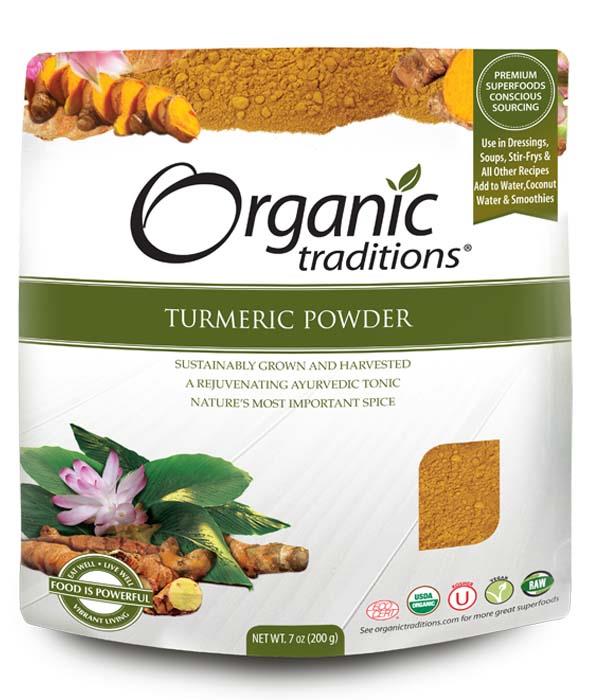
turmeric
Organic Turmeric Powder

Another great resource for learning more about turmeric and curcumin can be found from this article published by Authority Nutrition.

Okay, so perhaps you’re wondering how to get more turmeric into your diet? Turns out there are a lot of simple, healthy ways to do so. There are several turmeric supplements now available in health food stores and online. The one I personally use is this particular type from Thorne research, which I selected because it was shown within the research to be effective and it’s had several positive customer reviews online, but there are many other good options available as well. Bottom line, before selecting a supplement be sure to do your own research so that you’re able to make an informed choice.

Another way to get more turmeric into your diet is simply by eating it. This is where my easy and delicious Anti-inflammatory Turmeric Latte recipe comes in. Good news is that you don’t even need a fancy frothing machine to make this one; a Magic Bullet or other single serve mixer will do the trick!

Turmeric latte 2
Anti-inflammatory Turmeric Latte

To make one serving, here’s what you’ll need:

Ingredients:

  • 1 cup coconut milk (or milk of choice)
  • 1 tsp turmeric
  • 1/2 tsp cinnamon
  • 1/2 tsp vanilla
  • 1/2 tsp coconut oil
  • 1 Tbsp raw honey
  • pinch of nutmeg (about 1/8 tsp)

Method:

  • Pour milk into a small pot over medium-low heat. Add in remaining ingredients, whisking to combine.
  • Once mixture is warm (do not boil), carefully pour into your Magic Bullet (or some type of single serve blender) and blend for about 30 seconds. This is what makes it frothy!
  • Carefully remove the lid and pour slowly into a mug. Garnish with more cinnamon or nutmeg if you like.
  • Pause to think of one thing you’re grateful for, smile, and enjoy! 🙂
Turmeric latte
Deliciously healthy Anti-inflammatory Turmeric Latte

You can feel good about drinking this particular latte knowing that the turmeric will help to reduce inflammation in your body. What better way to kick off a new day than with a healthy latte that is good for your body and mind? Best part is that it tastes great too!

Wishing you health and happiness,

xo Julie


Stress + Anti-inflammatory Pineapple Turmeric Smoothie Bowl

Hello and Happy Friday, everyone!

I hope that you’ve had a wonderful week. Mine has been pretty hectic with trying to finish the manuscript I’ve been writing for submission to a scientific journal, but I’m almost there. During busy times like this I find it can be especially challenging to keep on track with eating nutritious food and maintaining good health, but I also know that it’s during these times in particular that eating well is essential. How so? Here’s a quick physiology lesson to explain:

When you’re stressed, your body releases stress hormones such as corticotropin releasing hormone and cortisol, which influence the body and the brain (Molina, 2013). You’ve probably heard of the “fight or flight” response; this the innate reaction to stress that our body undergoes when it experiences a stressor, whether real or perceived. The result is a rapid change in physiological and cognitive processes such as increased heart rate, widening of the pupils, narrowing of focus to direct attention towards the perceived threat, and behavioural changes (Nelson, 2005). This is the acute stress response.

Stress-Response-
The body’s response to stress (source: google images)

The purpose of the stress response is to help promote survival by helping to focus ones energy and attention on the threat. Generally, this system has worked quite well throughout history, helping us to avoid danger and to survive. However, in many current societies we are now subjected to significantly more stress, particularly of the psychological and social nature, compared to ever before. This results in a state of chronic stress whereby the body is constantly flooded with more stress hormones than are necessary, and for a longer period of time. The longer this continues, the more negative effects there are on an individuals body and mind, and the more likely they are to experience detrimental effects to their physical and/or mental health.

Stress curve and phases 3
The stress response (source: stress & health)


Another issue with stress is that it increases inflammation in the body. As I’ve discussed before, inflammation has now been implicated in numerous illness and disease states, especially those chronic in nature. From obesity, to diabetes, cancer, Alzheimer’s disease, and depression to name a few, inflammation seems to be a key factor driving these conditions. The main point to take away from all of this is essentially:

Chronic stress = increased inflammation = increase risk for disease

Fair enough, but you might be thinking “stress is a fact of life. What can I really do about it!?” As it turns out there is actually quite a bit you can do to help manage stress and reduce inflammation in your body. A first step is simply accepting that you CAN do something about managing your stress, followed by seeking out strategies and developing healthy and effective ways to cope.

The most effective strategies involve managing stress from a holistic perspective. That is, addressing both psychological and physical aspects of stress. This can involve things like practicing meditation and yoga, which I’ve personally found to be really helpful, to maintaining a healthy diet and consuming particular supplements.

For more tips on how to manage stress psychologically, check out this brief article from the American Psychological Association, along with this one from Simply Psychology. Choosing to educate yourself on how stress affects your body and mind gives you more control in making informed decisions that will nurture optimal health.

As far as dietary supplements go there are numerous that have been suggested. However, one in particular, the spice curcumin which is derived from turmeric, appears to be especially effective in reducing inflammation. Curcumin has anti-inflammatory effects throughout the body via its ability to regulate a range of inflammatory mechanisms. For instance, the enzyme indolamine (IDO) is expressed in various types of immune cells and is activated by pro-inflammatory cytokines, and plays a role in depression with respect to serotonin (a neurotransmitter central to mood regulation) synthesis (Lopresti et al., 2012; Sompayrac, 2012). Moreover, curcumin has been shown to inhibit IDO expression and activity, and to reduce pro-inflammatory cytokines (Lopresti et al., 2012). What you can take away from this is that:

Turmeric (curcumin) is a potent natural anti-inflammatory and can easily be incorporated into ones diet

turmeric
Organic Turmeric Powder

Many curcumin supplements are now available at health food stores and online. The one that I personally use is called Meriva-SR, and it has a potent slow release formula. I chose this one because it was shown within the scientific literature to be effective, and after reading numerous customer reviews I was confident in it’s efficacy.

There are of course other ways to integrate turmeric into your diet. It can be used in a wide range of recipes, but one of my favourites is this Anti-inflammatory Pineapple Turmeric Smoothie recipe I came up with!

Pineapple turmeric smoothie bowl 2
Anti-inflammatory Pineapple Turmeric Smoothie Bowl (topped with chia seeds, shredded unsweetened coconut, and pecans)

As always, try to use fresh, local, organic ingredients when possible. For one serving of this delicious smoothie you’ll need:

Ingredients:

  • 1/2 avocado
  • 1/2 frozen banana
  • 1 cup fresh or frozen pineapple
  • 1 cup coconut milk (or milk of choice)
  • 1 tsp turmeric powder
  • 1/2 tsp cinnamon
  • 1 Tbsp raw, unpasteurized honey

Method:

  • Place avocado, banana, and pineapple into your blender (I use a single serve Magic Bullet), and add enough milk just to cover the top of the mixture. Add in spices and honey. Blend until smooth.
  • Leave in a cup if you’re on the go, or pour into a bowl and garnish with your favourite toppings for a delicious smoothie bowl breakfast.
  • Smile, think of one thing you’re thankful for, and enjoy! 🙂
Pineapple Turmeric smoothie bowl 1
Yummy and Nutritious Anti-inflammatory Pineapple Turmeric Smoothie Bowl

The avocado and banana give this smoothie a creamy texture, plus healthy fats and fiber from the avocado, while the pineapple adds a sweet tropical flavour. To be honest I was skeptical when I first tried making this as to whether it would taste any good, and I was pleasantly surprised by how delicious it actually was!

I hope you’ll enjoy this healthy delicious smoothie as much as I do. It’s a great choice if you’re having a stressful day and need a nutritious pick-me-up to give you a boost of energy to get you through. Plus, you can feel great knowing that the turmeric will aid in reducing inflammation in your body, helping it to restore homeostasis (ie. balance) more efficiently.

Wishing you great health and much happiness!

xo Julie


Matcha-Turmeric Anti-inflammatory Smoothie

Happy “Matcha Monday” All!

I hope that everyone had a lovely weekend and wonderful Valentine’s Day! Here in Ontario the weather was quite cold and we got a LOT of snow. Fortunately I was able to keep warm and got to enjoy some family time over the weekend.We did some baking, and I made us enchiladas for dinner Sunday night.

After dinner we got cozy and put on the new James Bond – “Spectre” film that recently came out. I’m a pretty big James Bond fan, particularly of the Daniel Craig “James Bond” (he just does it so well – and looks great doing it hehe!). I did however, also enjoy a few too many not-so-healthy sweets over the weekend, which I’m feeling the effects of a little bit today. But all-in-all it was a pretty great, relaxing weekend.

Matcha turmeric smoothie 3
Today’s “Matcha Monday” Recipe: Matcha-Turmeric Anti-inflammatory Smoothie Bowl

You may already be aware of the mounting evidence suggesting that sugar has numerous negative effects on both physical and mental health. However, if you’re just learning about this now and would like a little more information, this article by Authority Nutrition does a nice job of briefly summing it up.

In short, sugar is linked to inflammation (as it tends to increase activity of pro-inflammatory mechanisms in the body), which appears to underlie many disease states, particularly those chronic in nature, enhancing their severity. Inflammation has been implicated in everything from diabetes, to heart disease, obesity, Alzheimer’s disease, depression, and cancer, to name a few.

So sugar enhances inflammation, which fuels chronic disease states, yet sugar is almost everywhere, or so it seems. How can we counteract it’s negative effects? Obviously, a key first step is reducing and limiting ones intake of highly processed, high-sugar food and beverage items.

An optimal approach is to try consuming mainly fresh, local, and organic foods when possible, and to minimize your consumption of processed items. But consuming some processed food can be tough to avoid, thus it’s critical to pay attention to the nutritional information provided on the packaging. Nutritional labels give you a breakdown of what’s in the product and the ingredients that were used to make it. I appreciate how confusing ingredient lists and nutrition labels can be; to better understand them check out this article which walks you through how to read and make sense of all that info.

Another way to minimize the detrimental effects of sugar, but still satisfy your sweet tooth, is by using natural sweeteners such as raw honey or real maple syrup. For instance, raw unpasteurized honey has some scientifically validated beneficial health properties, such as antioxidants and the ability to reduce some pro-inflammatory cytokines. More on this can be found here. However, be mindful of the fact that even these natural sweeteners should be consumed in moderation.

Matcha
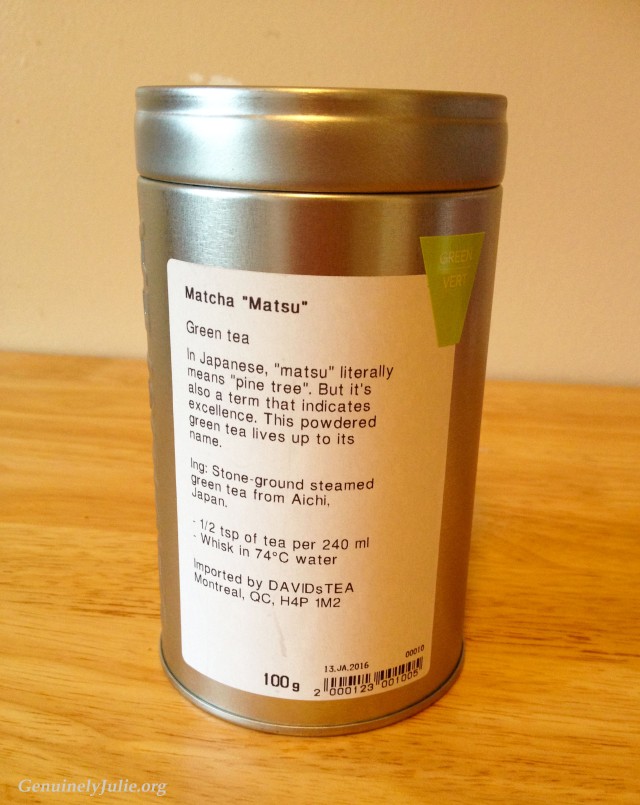
Matcha Green Tea

Additionally, there are several spices and other herbal compounds that have shown efficacy for antioxidant properties and reducing inflammation. One of these is of course matcha green tea. I go into more detail about matcha’s health benefits in my Maple Matcha Latte post from a few weeks back.

Another natural anti-inflammatory is the spice Turmeric, from which curcumin is derived. Considerable scientific evidence has demonstrated that curcumin exerts anti-inflammatory effects throughout the body via its ability to regulate a range of inflammatory mechanisms, such as pro-inflammatory cytokines (Borre et al., 2014; Kulkarni et al., 2009; Lopresti, Hood, & Drummond, 2012). For more information on the health benefits of Turmeric (and curcumin) check out this article by Authority Nutrition.

turmeric
Organic Turmeric Powder

Alright, now that I’ve given you a little background on how sugar and inflammation can threaten your health, and a few ways to counter this with natural compounds, I’d like to share this nutritious, anti-inflammatory smoothie bowl recipe I came up with: the Matcha-Turmeric Anti-inflammatory Smoothie Bowl!

Matcha turmeric smoothie 2
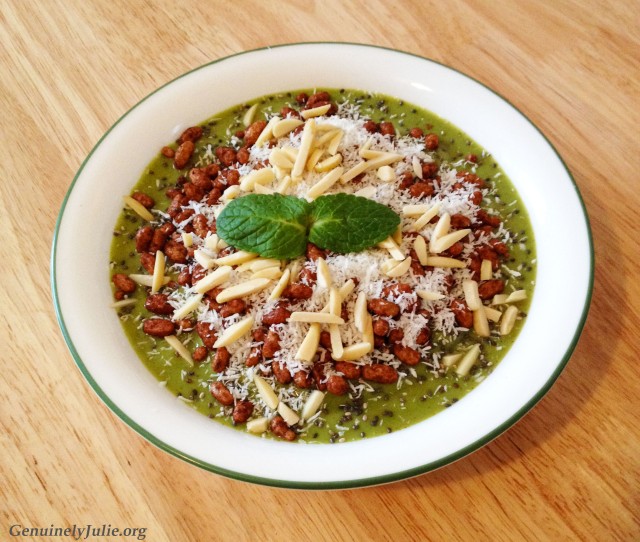
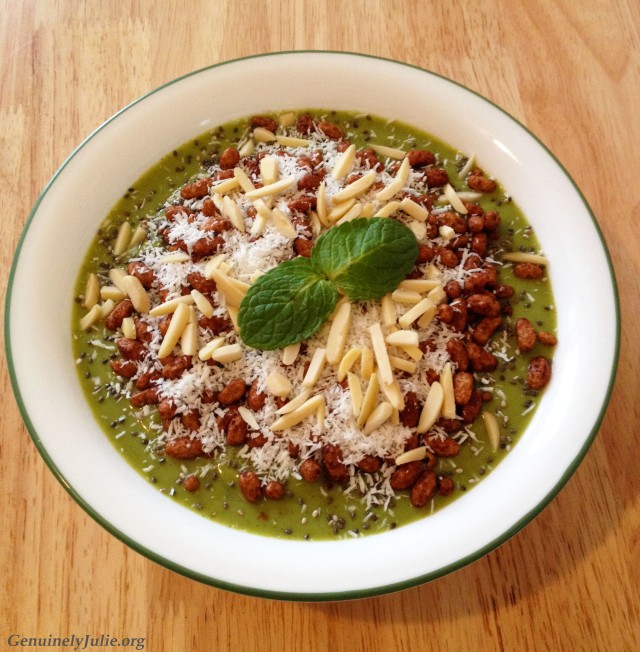
Matcha-Turmeric Anti-inflammatory Smoothie Bowl topped with chia seeds, One Degree Organics Brown Rice Cacao Crisps, shredded coconut, slivered almonds, & mint.

This smoothie has a naturally sweet taste from the pineapple (or mango if you prefer), a creamy texture from the avocado, undertones of matcha, and a touch of spice from the turmeric and cinnamon. Here’s how to make it:

Ingredients:

  • 1/2 avocado
  • 1/2 frozen banana
  • 3/4 cup pineapple, fresh or frozen (or mango)
  • 1 cup coconut or almond milk, unsweetened (add more if needed)
  • 1 Tbsp raw, unpasteurized honey or real maple syrup
  • 1 tsp matcha
  • 1 tsp turmeric powder
  • 1/2 tsp cinnamon

Optional toppings: shredded unsweetened coconut, One Degree Organics Brown Rice Cacao Crisps, almond, pecans, walnuts, chia seeds, mint.

Method:

  • Place the first four ingredients in a single serve mixer (such as a Magic Bullet) or blender. Add in honey, matcha, turmeric, and cinnamon.
  • Blend until the mixture is pureed and thoroughly combined.
  • Pour into a bowl (or leave in a travel cup if you’re on the go) and top with your favourite healthy toppings.
  • Smile, think of one thing you’re thankful for, and enjoy! 🙂
Matcha Turmeric smoothie 1
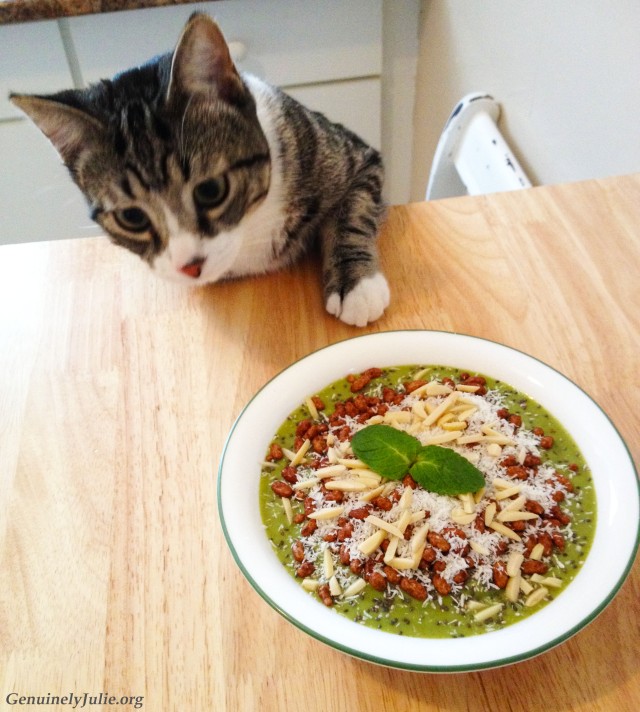
Even Calvy wants in on this delicious and healthy Matcha-Turmeric Anti-inflammatory Smoothie Bowl!

I hope that you’ll enjoy this nutritious, anti-inflammatory smoothie! It’s a great one to start the day with as it will fill you up thanks to the fiber from the avocado and pineapple, and keep your energy levels up too. The anti-inflammatory properties are a wonderful way to help your body re-establish homeostasis (ie. balance), particularly after a night out enjoying some sugary cocktails or after eating a few too many yummy sweet treats.

Wishing you health and happiness,

xo Julie